
Many foreigners are surprised by how often earthquakes happen in Japan.
Emergency alerts suddenly sound on smartphones. News channels interrupt regular programming. Typhoon warnings appear on TV screens.
It is natural to wonder: Is Japan a dangerous country?
The answer is more complex. Japan experiences many natural disasters, but it is also one of the most disaster-prepared countries in the world.
This guide explains why disasters happen in Japan and what foreign residents should know to stay safe.
目次
1. Why Are Earthquakes So Common in Japan?
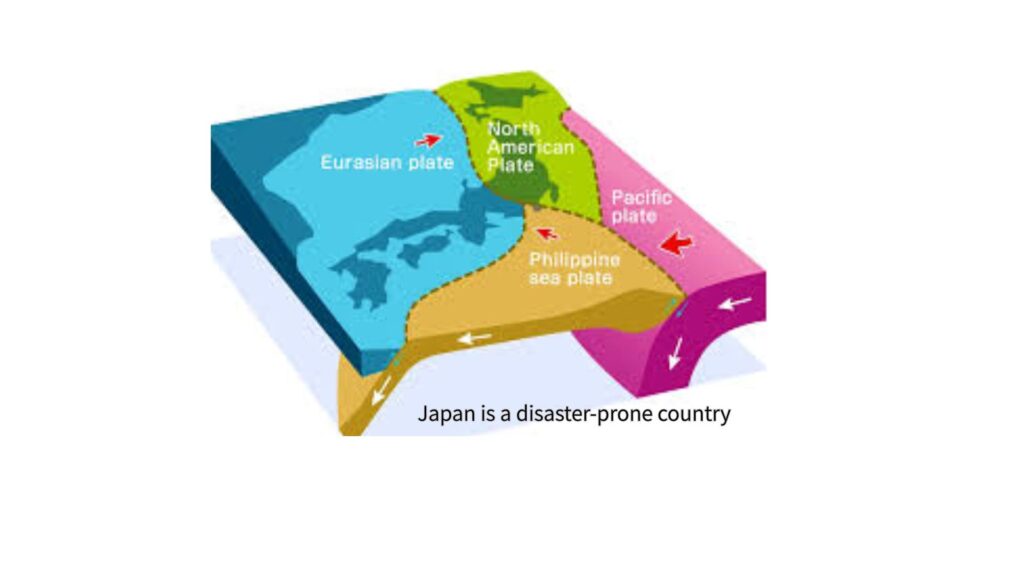
Japan sits on the boundary of four major tectonic plates:
- Pacific Plate
- Philippine Sea Plate
- North American Plate
- Eurasian Plate
When these plates move and collide, earthquakes occur. Japan is part of the “Pacific Ring of Fire,” one of the most active seismic zones in the world.
Small earthquakes happen frequently. However, buildings in Japan are constructed under strict earthquake-resistant standards.
Real Example: The Great East Japan Earthquake (2011)
The 2011 Great East Japan Earthquake (magnitude 9.0) triggered a massive tsunami and nuclear crisis.
Many foreigners experienced difficulties such as:
- Lack of English information
- Transportation shutdowns
- Confusion caused by misinformation on social media
- Not understanding evacuation warnings
Since then, Japan has significantly improved multilingual emergency systems and early warning alerts.
Real Example: The 2018 Osaka Earthquake
The Osaka earthquake occurred during morning rush hour. Elevators stopped, trains were suspended, and supermarkets temporarily ran out of supplies.
Foreign residents struggled with:
- Unclear transportation recovery times
- Gas supply interruptions
- Limited access to information in English
However, infrastructure and public services were restored relatively quickly compared to many other countries.
2. Typhoons: Disasters You Can Prepare For
Typhoon season typically lasts from June to October. Typhoons bring strong winds, heavy rain, flooding and power outages.
The important difference: Typhoons are predictable.
Weather forecasts provide several days of warning, allowing residents to prepare water, food and batteries in advance.
Japan Meteorological Agency provides official warnings and updates.
3. Tsunami Risk After Large Earthquakes
If a strong earthquake occurs near the ocean, a tsunami may follow.
Most important rule: If you feel strong shaking near the coast, move immediately to higher ground.
- Do not go to the beach to watch the waves
- Do not wait for official confirmation if shaking is severe
- Follow evacuation signs
4. Heavy Rain and Urban Flooding
In recent years, extreme rainfall events have increased. Even large cities can experience sudden flooding.
Be cautious in:
- Underground stations and shopping areas
- Riverside neighborhoods
- Low-elevation districts
Check your local hazard map provided by your city office.
5. Volcano Activity
Japan has over 100 active volcanoes. Eruptions are rare in most daily life areas, but certain regions monitor volcanic activity closely.
Alert levels are announced when necessary.
6. Is Japan Safe to Live In?
Japan experiences many natural disasters, but it is also highly prepared.
- Strict building codes
- Early earthquake warning systems
- Organized evacuation shelters
- Fast infrastructure recovery
Japan is not “dangerous” — it is a country designed with disasters in mind.
7. 5 Essential Disaster Preparations for Foreigners
- Check your local hazard map
- Secure heavy furniture
- Prepare an emergency kit
- Turn on emergency alerts on your phone
- Know your nearest evacuation area
Also prepare copies of your residence card and passport (both digital and paper).
Conclusion
Japan has earthquakes, typhoons, tsunamis, heavy rain and volcanoes.
But it also has one of the world’s strongest disaster-prepared systems.
Fear is natural. Preparation is powerful.
In the next article, we will explain what to do during an earthquake in different situations: at home, on a train, or at work.
Continue the Series: Disaster Preparedness in Japan (For Foreigners)
Understanding why disasters happen in Japan is the first step. Next, learn exactly what to do during an earthquake.
Next Article:
EP2: What to Do During an Earthquake in Japan (Step-by-Step Guide)
Recommended Reading:
- EP3: Japanese Emergency Alerts & Disaster Apps Guide
- EP4: Emergency Kit Checklist in Japan (Essential Supplies)
Complete Guide:
Disaster Preparedness in Japan for Foreigners – Complete Guide