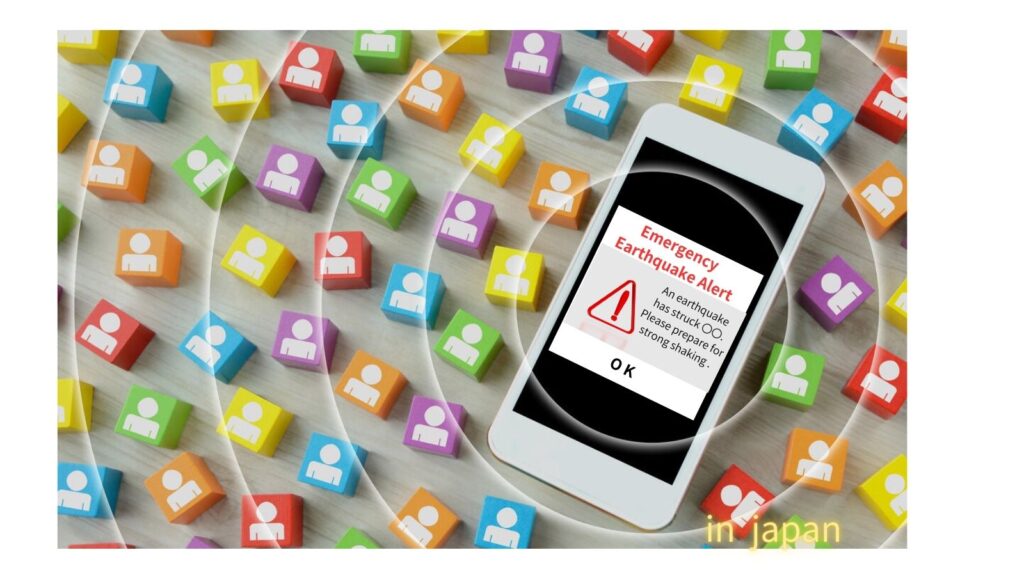

Your phone suddenly makes a loud alarm sound.
The screen shows Japanese text:
Emergency Earthquake Warning
Strong shaking expected
If you cannot read Japanese fluently, this moment can be frightening.
Japan has one of the most advanced disaster alert systems in the world. The real problem is not the system — it is understanding the language.
This guide explains:
- How to read Japanese emergency alerts
- What each warning level means
- Which disaster apps foreigners should install
- Real lessons from past major earthquakes
目次
1. Emergency Earthquake Warning (緊急地震速報)
Issued by the Japan Meteorological Agency, this alert may arrive seconds before strong shaking.
Common Japanese Phrases You May See
- 緊急地震速報 (Emergency Earthquake Warning)
- 強い揺れに警戒してください (Strong shaking expected)
- 震度5弱以上と予想 (Intensity 5 Lower or higher predicted)
What It Means
Strong shaking is expected within seconds.
What You Should Do Immediately
- Protect your head
- Get under a sturdy desk or table
- Move away from windows
- Do NOT use elevators
Real Case: 2018 Osaka Earthquake
During the Osaka earthquake, alerts sounded just seconds before strong shaking. Some foreigners ran outside in panic. The safer action was to stay inside and protect yourself.
2. Tsunami Alerts: Know the Difference
Japanese Alert Terms
- 大津波警報 (Major Tsunami Warning)
- 津波警報 (Tsunami Warning)
- 津波注意報 (Tsunami Advisory)
Action Guide
- Major Tsunami Warning: Immediately evacuate to higher ground.
- Tsunami Warning: Evacuate immediately.
- Tsunami Advisory: Stay away from the coast.
Real Case: 2011 Great East Japan Earthquake
During the 2011 disaster, red “Major Tsunami Warning” messages appeared nationwide. Some people delayed evacuation because they did not fully understand the urgency.
If you feel strong shaking near the coast, evacuate immediately.
3. Evacuation Levels Explained
- Level 3: Prepare to evacuate (elderly first)
- Level 4: Evacuation Order – Everyone must evacuate
- Level 5: Emergency Safety – Immediate life-saving action
If you see “Evacuation Order,” it means move now.
4. Best Disaster Apps for Foreigners in Japan
App Comparison Table
| App Name | Languages | Earthquake Alerts | Tsunami Info | Weather Alerts | Ease of Use | Best For |
|---|---|---|---|---|---|---|
| Safety tips | Multi-language | Excellent | Excellent | Excellent | Very Easy | Non-Japanese speakers |
| NHK WORLD-JAPAN | English | News-based | Yes | Yes | Easy | Reliable English updates |
| Yahoo! Disaster Alert | Japanese | Very Fast | Yes | Yes | Moderate | Advanced users |
Which App Should You Install?
- If you do not read Japanese: Install Safety tips + NHK WORLD
- If you can read some Japanese: Add Yahoo! Disaster Alert
- For fastest push alerts: Yahoo! app
- For calm English explanations: NHK WORLD
5. What Foreigners Struggled With in Past Disasters
2011 Great East Japan Earthquake
- Limited English emergency information
- Confusion caused by misinformation
- Radiation updates difficult to understand
2018 Osaka Earthquake
- Gas supply suspension notices only in Japanese
- Aftershock probability reports unclear
- Transportation recovery information hard to follow
Using multiple reliable apps reduces confusion.
6. Quick Setup Checklist
- Turn ON emergency alerts in phone settings
- Install Safety tips
- Install NHK WORLD
- Bookmark your local city website
- Check nearest evacuation area
Conclusion
Japan’s disaster system is fast and accurate.
The key to safety is understanding the words before an emergency happens.
Preparation reduces fear.
Next: Essential Emergency Kit Checklist for Foreigners in Japan.
Continue the Series: Disaster Preparedness in Japan (For Foreigners)
Once you understand emergency alerts, the next step is preparing a 72-hour emergency kit.
Previous Article:
EP2: What to Do During an Earthquake in Japan (Step-by-Step Guide)
Next Article:
EP4: Emergency Kit Checklist in Japan (Essential Supplies)
Recommended Reading:
Complete Guide:
Disaster Preparedness in Japan for Foreigners – Complete Guide